
Product Usage: This product is intended solely for use as a research chemical. It is designated exclusively for in vitro research and laboratory testing. All information provided on this site is for educational purposes only. It is strictly prohibited to administer this product to humans or animals. Only licensed and qualified professionals should handle it. This product is not classified as a drug, food, or cosmetic and must not be misrepresented or used as such. This product is for research use only. Not for human consumption.
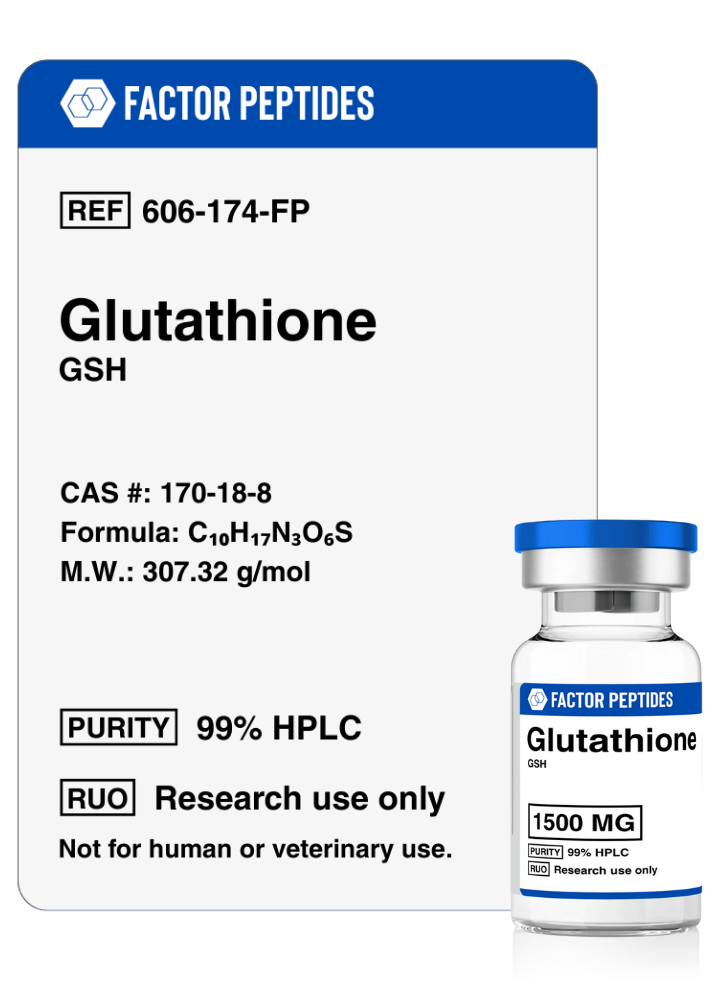
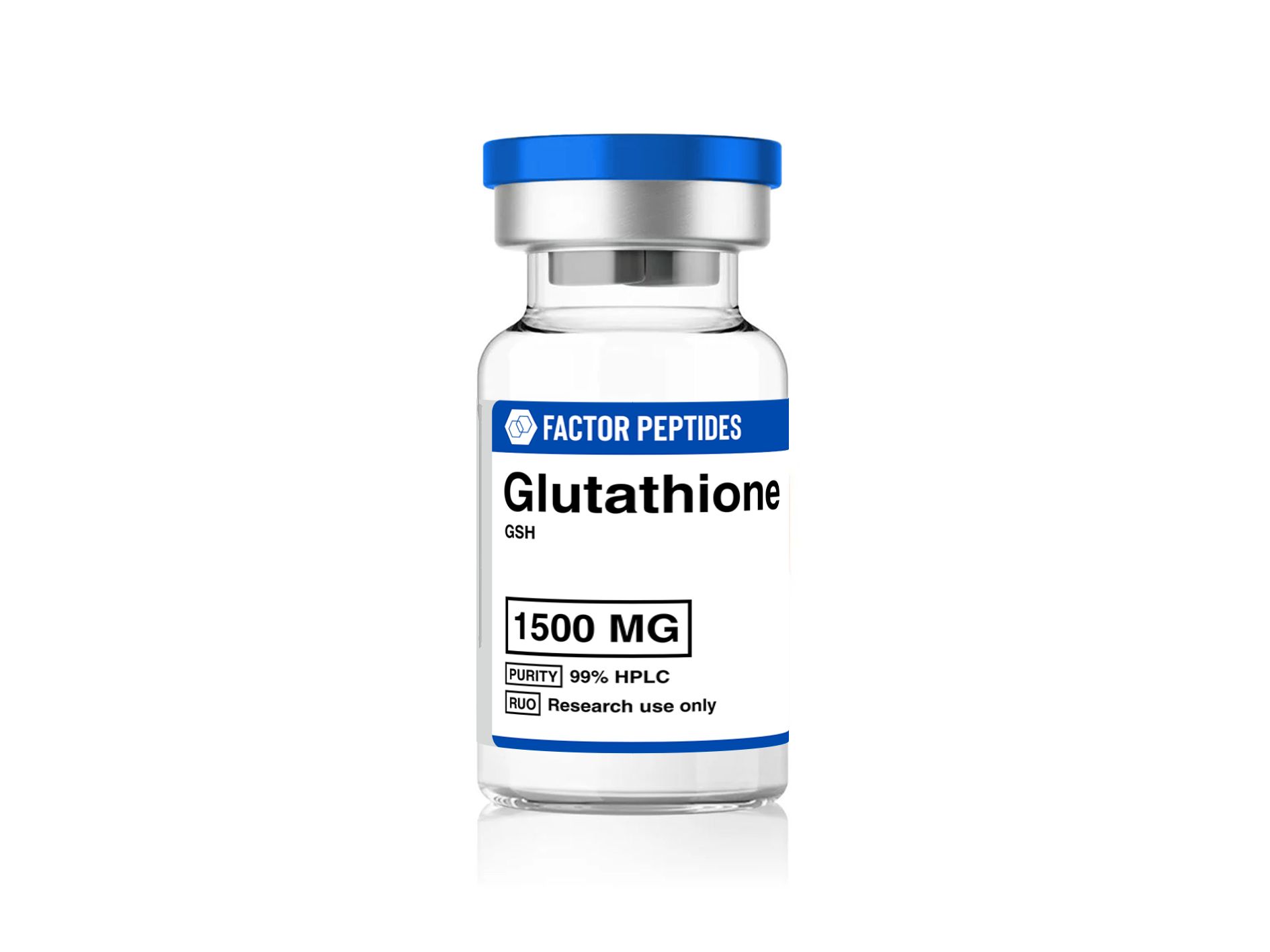
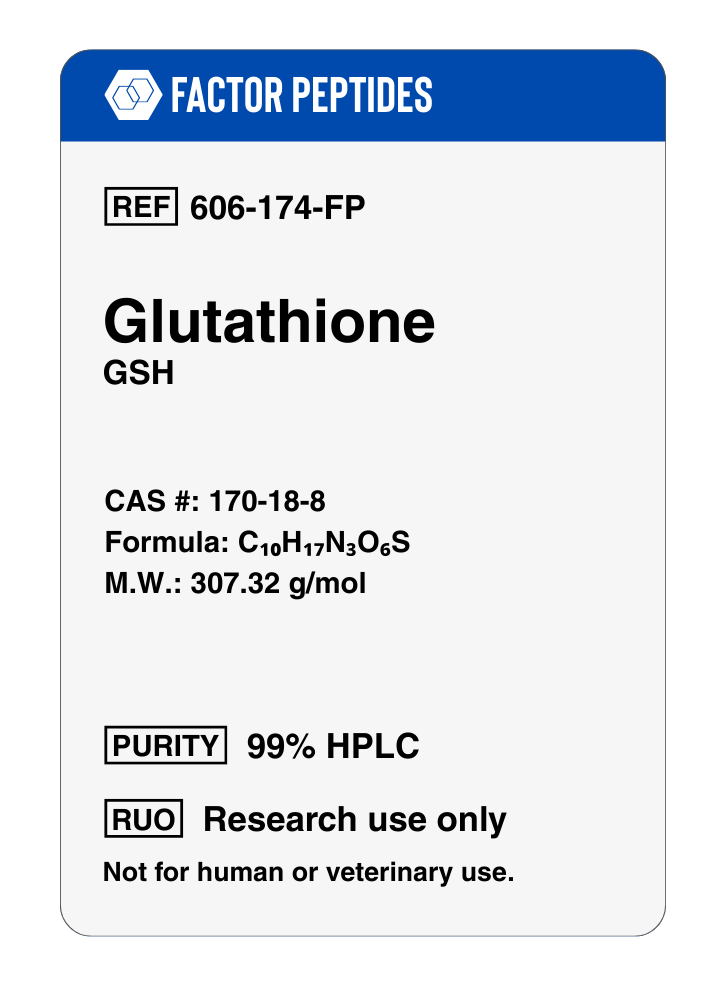
Glutathione 1500 mg
Glutathione is a powerful antioxidant and key regulator of numerous biochemical pathways in the body. Naturally abundant in human tissues, its levels tend to decline with age. Research suggests that glutathione may reduce the risk of neurodegenerative diseases, support cartilage integrity, combat age-related changes in vision, enhance immune response, and promote healthier, more youthful skin. Collectively, the evidence highlights glutathione’s role as a potent anti-aging agent with wide-ranging health and immune benefits.
$65.00
Cellular Age Support Peptides
Cellular Growth Research Peptides
Metabolic Activation Peptides
Metabolic Research Peptides
Popular Peptides
Reproductive System Research Peptides
Tissue Integrity Research Peptides
Uncategorized
- DESCRIPTION
- STORAGE
L Glutathione
L Glutathione is a tripeptide composed of cysteine, glutamate, and glycine. It is found throughout the body and functions as a major intracellular antioxidant and detoxification cofactor, particularly in the liver, lungs, and central nervous system.
As a primary free radical scavenger, glutathione helps protect DNA, cell membranes, and proteins from oxidative damage. Declining glutathione levels are associated with aging, neurodegenerative conditions, eye disease, and a wide range of chronic illnesses. Loss of glutathione is thought to be both a consequence of aging and a contributor to age related decline.
Oral glutathione is largely broken down in the gastrointestinal tract. Research suggests that the most effective ways to alter systemic glutathione levels in animal models are via injection, inhaled or intranasal delivery, or advanced transdermal approaches.
L Glutathione Structure
Amino Acid Composition: Glutamate Cysteine Glycine (Glu Cys Gly)
Molecular Formula: C10H17N3O6S
Molecular Weight: 307.33 g/mol
PubChem CID: 124886
CAS Number: 170 18 8
Synonyms: Glutathione, GSH, Isethion
L Glutathione Research
1. Master Antioxidant and Redox Regulator
L Glutathione is one of the most important low molecular weight antioxidants produced by cells. The sulfur in its cysteine residue allows GSH to neutralize a wide spectrum of reactive species including peroxides, nitrogen dioxide, HOCl, and lipid peroxides. It also helps recycle and support other antioxidants such as vitamins C and E.
Glutathione is present both intracellularly and in the extracellular matrix, with particularly high concentrations in the liver, lungs, and brain. Deficiency has been linked to diabetes, HIV, cancer, infections like tuberculosis, and general oxidative stress. Research suggests that glutathione levels may serve as a useful biomarker for disease burden and progression.
2. Broader Biological Roles
Beyond its antioxidant function, glutathione participates in the synthesis of leukotrienes and prostaglandins, making it an important regulator of select inflammatory pathways. It also serves as a cofactor in various enzymatic reactions and supports citrulline in the nitric oxide cycle, which is relevant for vascular tone and cardiovascular health.
In the endoplasmic reticulum, GSH is critical for proper protein folding and the formation of disulfide bonds. This helps maintain correct three dimensional protein structure and supports normal receptor binding and signaling. In the nervous system, glutathione influences redox sensitive receptors such as NMDA, modulates ionotropic receptors, and interacts with P2X7 receptors on Muller cells, indirectly regulating neurotransmitter handling and retinal function.
3. Administration and Age Related Decline
Glutathione synthesis capacity declines with age, typically beginning around midlife. This decline limits the ability of precursors such as N acetyl cysteine to fully restore GSH stores. While certain dietary factors (curcumin, NAC, cruciferous vegetables) can support glutathione pathways, their impact is constrained by reduced synthetic capacity.
Animal and clinical data suggest that the most reliable ways to significantly raise systemic glutathione are via injection or inhaled routes. Emerging transdermal delivery systems are being explored but are not yet widely adopted. These approaches bypass gastrointestinal breakdown and directly increase circulating GSH.
4. Glutathione, Aging, and Neurodegeneration
Oxidative damage is a central driver of senescence, DNA damage, metabolic dysfunction, and visible aging. As glutathione production declines, reactive oxygen species tend to increase after a lag period, contributing to accelerated aging, particularly beyond midlife.
In the brain, glutathione plays a key role in regulating ferroptosis, an iron dependent form of cell death. Insufficient GSH allows ferroptosis to proceed unchecked, which may contribute to disorders such as Parkinson’s disease and other neurodegenerative conditions. Supplementation with glutathione or NAC has shown promise in preclinical models for reducing neurodegenerative risk and mitigating age related changes in the CNS.
5. Cancer: Dual Protective and Problematic Roles
Glutathione is central to detoxifying carcinogens. For example, in the lungs of smokers, glutathione helps neutralize nitrogen containing toxins in cigarette smoke and may lower long term cancer risk. In this preventative context, higher GSH is beneficial.
Once a malignancy is established, however, glutathione can protect tumor cells from chemotherapy and oxidative insults. High tumor GSH levels may promote therapy resistance and metastasis by neutralizing reactive species generated by the body and by anti cancer drugs. This has led to interest in selectively modulating glutathione within tumor tissue while preserving systemic antioxidant protection.
6. Eye Health and Vision
In the eye, glutathione supports Muller cells, which maintain retinal structure, regulate neurotransmitter levels, and protect against diabetic retinopathy and other retinal stressors. In the lens, GSH maintains protein thiols in a reduced state, preserving transparency and normal light scattering.
Reduced lens glutathione correlates with cataract formation and changes in membrane permeability that impair nutrient exchange. Animal studies suggest that glutathione containing eye drops and systemic supplementation can reduce oxidative stress in ocular tissues, slowing age related declines in visual acuity and lowering risk of cataracts and other degenerative changes.
7. Cartilage and Joint Health
In cartilage, glutathione helps chondrocytes adapt to mechanical and oxidative stress. Research in bovine models indicates that joint unloading and appropriate rest after controlled mechanical loading boosts local glutathione levels and improves the ability of cartilage to withstand stress. This adaptive response may slow development of osteoarthritis.
8. Skin Appearance and Photoaging
Moderate glutathione supplementation in research subjects has been associated with reductions in fine wrinkles, improved skin elasticity, and decreased photoaging signs over a 12 week period. GSH appears to reduce melanin synthesis, leading to fewer age spots and overall lighter, more even skin tone, which may also contribute to a reduced risk of UV induced skin damage.
9. Immune Support
The immune system is highly sensitive to glutathione status. In health, raising GSH may have subtle effects, but in disease states such as HIV or acute viral illness, supplementation with glutathione or NAC has been shown to enhance immune function and antioxidant capacity.
A pilot study of liposomal glutathione found that supplementation increased GSH stores, improved natural killer cell activity, and enhanced lymphocyte proliferation. In this way, maintaining robust glutathione reserves may “prime” immune responses for more effective defense when challenges arise.
L Glutathione Summary
L Glutathione is a central antioxidant and redox regulator with broad roles in detoxification, protein folding, immune function, vascular regulation, and cell survival. Age related declines in glutathione synthesis are linked to neurodegeneration, ocular changes, cartilage wear, immune vulnerability, and visible skin aging.
Research suggests that restoring or supporting glutathione levels may:
- Reduce oxidative stress and support healthy aging
- Protect brain tissue and support cognitive function
- Support retinal and lens health and visual acuity
- Promote healthier cartilage and joint resilience
- Improve skin tone, elasticity, and photoaging markers
- Enhance immune readiness in the setting of illness
FOR RESEARCH USE ONLY
All articles and product information provided on this website are for informational and educational purposes only.
The products offered on this website are furnished for in vitro studies only. In vitro studies (Latin “in glass”) are performed outside of living organisms. These products are not medicines or drugs and have not been approved by the FDA to prevent, treat, or cure any medical condition, ailment, or disease. Any form of bodily introduction into humans or animals is strictly prohibited by law.
Glutathione for sale at Peptide Sciences is limited to educational and scientific research only, not for human consumption. Only purchase Glutathione if you are a properly licensed and qualified researcher.
Factor Peptides Storage Guidelines:
These peptides arrive in a dried, stabilized form produced by a process called lyophilization, or freeze drying. In this state, they are generally suitable for transport and short-term storage at typical room temperatures for several months.
Once the dry powder is mixed with bacteriostatic water and turned into a liquid solution, the storage requirements change. The reconstituted solution should be kept in a refrigerator to help maintain its properties, and is usually considered suitable for use for about 30 days under chilled conditions.
Lyophilization involves freezing the material and then exposing it to low pressure so that ice in the sample passes directly from solid to vapor, rather than melting. This leaves behind a light, porous, white solid that is more stable than the original liquid. In this form, the product can often be kept at room temperature until it is time to add diluent.
After delivery, it is good practice to protect the vials from heat and strong light. If the product will be used in the near future, storing the lyophilized powder or reconstituted solution in a refrigerator at temperatures below about 4°C (39°F) is typically appropriate. The dry form often remains intact at room temperature for a number of weeks, so this may also be acceptable when immediate refrigeration is not available and the intended use is relatively soon.
For storage over longer periods, such as many months or years, much colder conditions are preferred. Placing the vials in a deep freezer, around -80°C (-112°F), is commonly used to help preserve the structure and activity of peptides for extended time frames.