
Product Usage: This product is intended solely for use as a research chemical. It is designated exclusively for in vitro research and laboratory testing. All information provided on this site is for educational purposes only. It is strictly prohibited to administer this product to humans or animals. Only licensed and qualified professionals should handle it. This product is not classified as a drug, food, or cosmetic and must not be misrepresented or used as such. This product is for research use only. Not for human consumption.
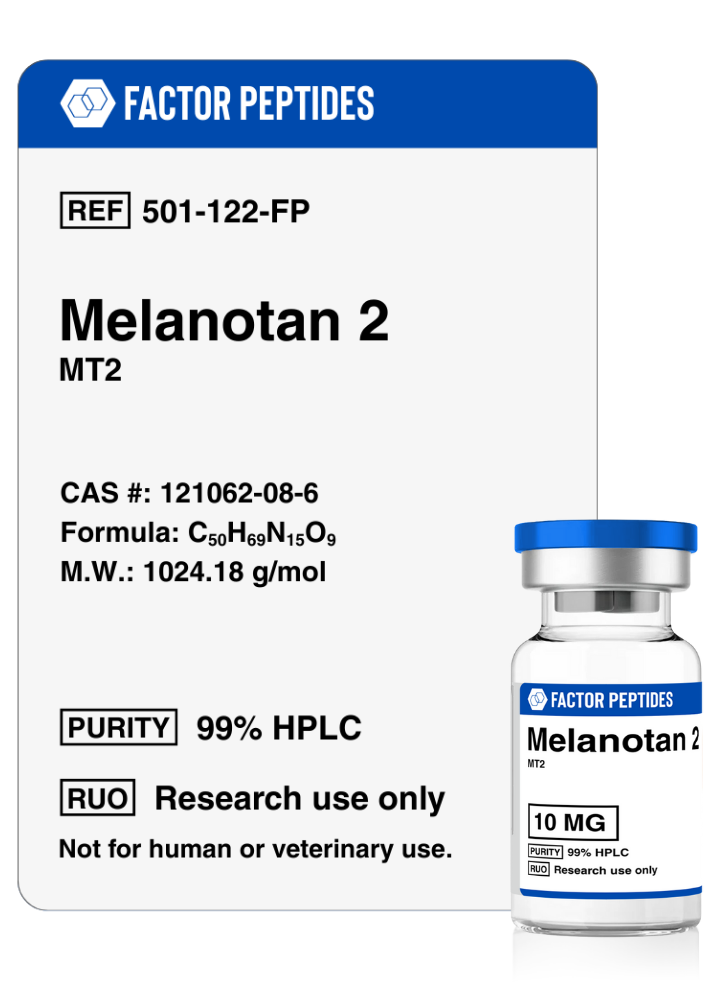
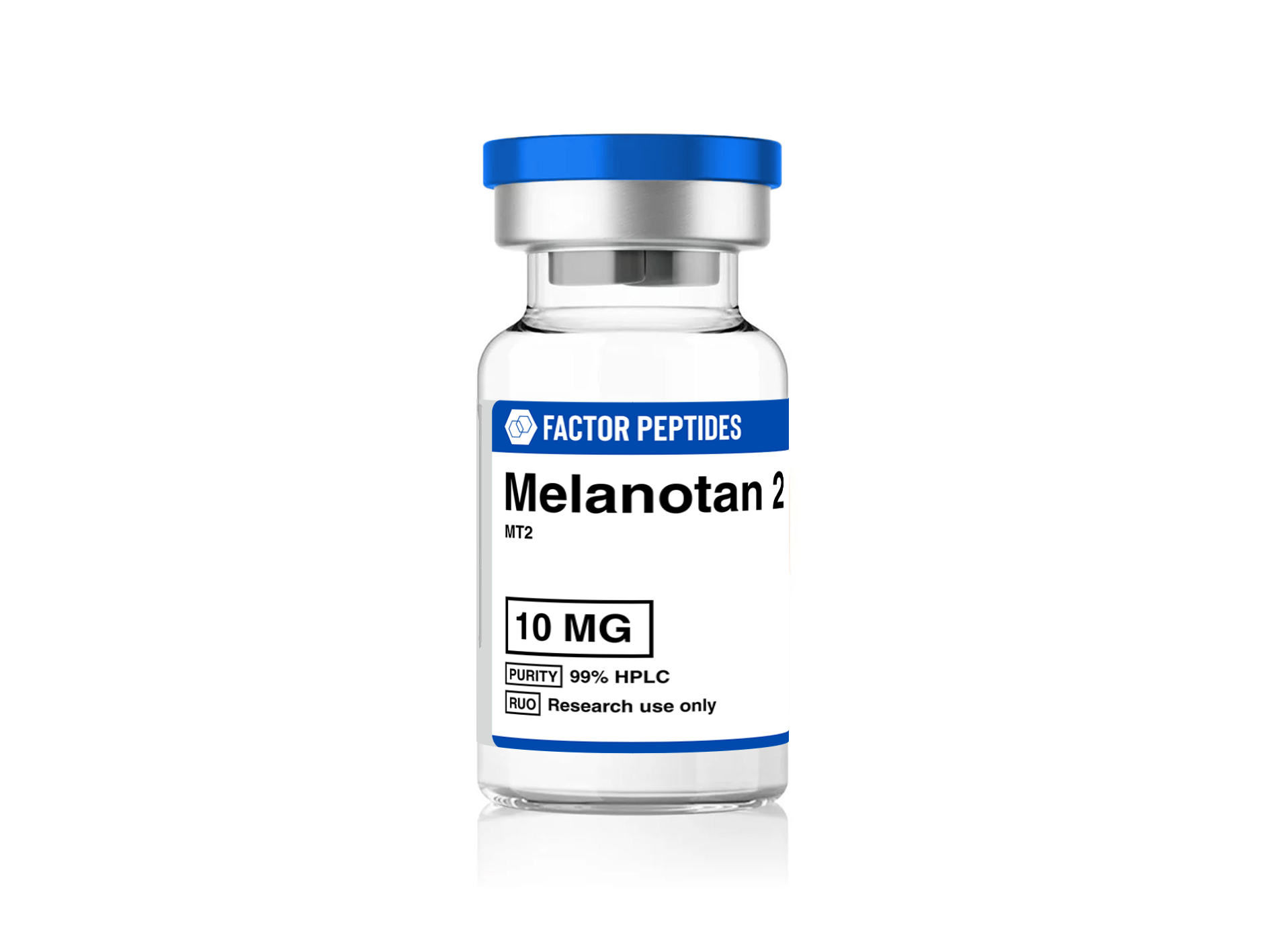
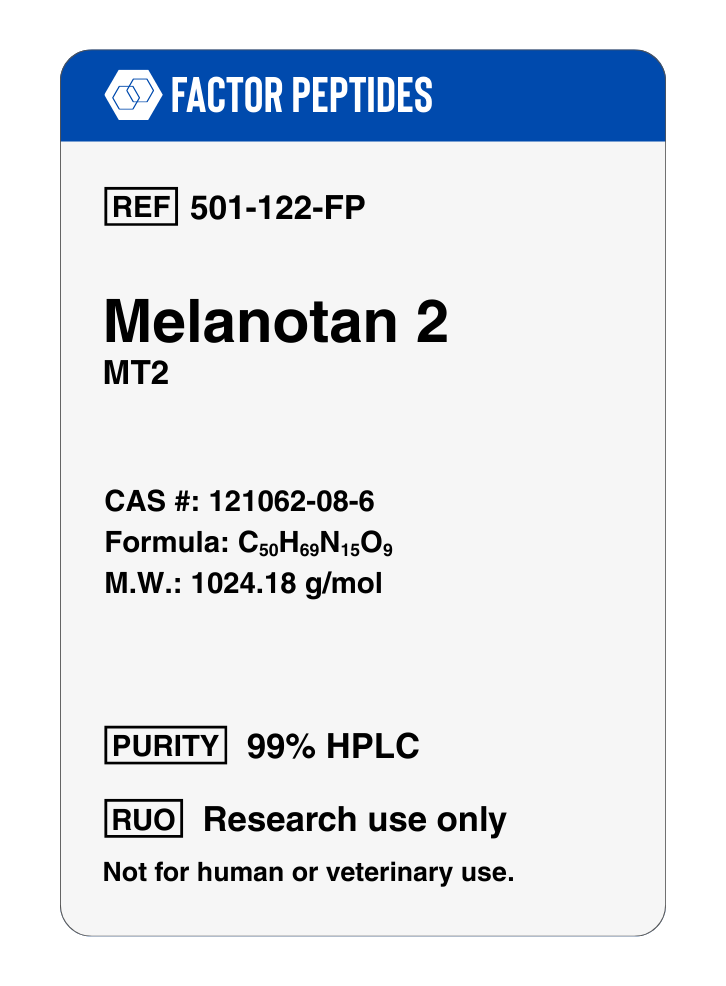
Melanotan 2 10 mg
Melanotan-2 (MT-2) is a laboratory-created version of a natural hormone involved in skin pigment regulation. First explored several decades ago, it has been observed in research settings to influence sexual response, lessen certain compulsive or addictive tendencies, decrease appetite, and enhance the production of melanin in the skin. Studies indicate that by activating pigment-producing cells, it can deepen skin coloration, and experimental work has also examined its potential impact on neurodevelopmental conditions when administered during early stages of growth.
$50.00
All Products
- DESCRIPTION
- STORAGE
What Is Melanotan 2 (MT-2)?
Melanotan 2 (MT-2) is a laboratory-designed analogue of the human hormone alpha-melanocyte-stimulating hormone (α-MSH). Researchers at the University of Arizona first created it in the 1980s after noticing that α-MSH not only deepened skin color in rodents but also triggered sexual arousal. Although the original goal was to create a “tanning without sun” compound, later studies showed that MT-2 influences a broad range of biological and behavioral processes, including:
- enhancing sexual desire and arousal,
- stimulating skin pigmentation and tanning,
- reducing certain compulsive behaviors,
- modulating reward and addiction pathways,
- lowering appetite and food intake,
- decreasing glucagon output, and
- shifting autism-related behaviors in specific research models.
Melanotan 2 Peptide Structure
Peptide Sequence: Nle-Asp(1)-His-D-Phe-Arg-Trp-Lys(1)
Molecular Formula: C50H69N15O9
Molecular Weight: 1024.198 g/mol
PubChem CID: 92432
CAS Number: 121062-08-6
Melanotan 2 Research
How MT-2 Acts on Melanocortin Receptors
MT-2 produces its effects by activating melanocortin receptors. Five receptor subtypes have been identified, each with different roles in the body. Melanotan 2 has highest activity at MC-4R and MC-1R and weaker activity at MC-3R.
- MC-1R: Located on melanocytes. When stimulated, it drives increased skin and hair pigmentation.
- MC-2R: Found in the adrenal cortex. Activation supports secretion of adrenal hormones such as cortisol.
- MC-3R: Involved in energy balance and appetite control, although its full function is still being clarified.
- MC-4R: Linked to regulation of food intake, body weight, sexual behavior, erectile function, and overall energy homeostasis.
- MC-5R: Expressed in sweat glands and pancreatic islet cells, where it contributes to secretory functions.
Findings in Autism-Related Animal Models
One of the more recent avenues of MT-2 research focuses on autism spectrum disorder (ASD). Using a maternal immune activation mouse model that mimics core ASD-like behaviors, scientists tested whether MT-2, known to increase oxytocin release, could influence these traits. In this model, MT-2 treatment improved social interaction, increased vocal communication, and reduced repetitive behaviors. The peptide also boosted expression of oxytocin receptors in selected brain regions, pointing to a specific oxytocin-related pathway behind these changes[1].
These results suggest that MT-2 may serve as a valuable research tool for mapping the neural circuits involved in ASD and for identifying potential therapeutic targets, even though it is not a treatment for human autism at this time.
Effects on Appetite, Food Preference, and Body Weight
Preclinical experiments indicate that Melanotan 2 can strongly influence hunger and dietary choices. The MC-4R receptor, a primary target of MT-2, is central to how much and what animals eat. When MT-2 is administered to mice, they typically eat less and show reduced interest in high-fat foods. Conversely, animals that lack MC-4R tend to favor fatty diets and do not respond to MT-2 in the same way[2].
These actions resemble some of leptin’s “satiety hormone” effects, but leptin therapy has not been very successful for obesity, partly because appetite control involves both leptin-dependent and leptin-independent melanocortin pathways. MT-2 appears to engage these circuits more broadly and can influence thyrotropin-releasing hormone (TRH) expression in key hypothalamic regions related to satiety[3][4][5]. Because MT-2 can reach the central nervous system more effectively than leptin when given from outside the body, it is widely used as a probe to study how the brain regulates hunger and energy expenditure.
MT-2 in Diabetes and Glucose Control
Diabetes is characterized by chronic high blood sugar, excessive glucagon release, and increased production of ketone bodies[6]. Leptin has been shown to counter these features by promoting glucose uptake, lowering glucagon, and suppressing ketone formation, and these effects are mediated through melanocortin signaling pathways.
Follow-up work has demonstrated that melanocortin receptor agonists like MT-2 can mimic key aspects of leptin’s action on blood glucose regulation[7]. Since MT-2 crosses into the brain more readily than leptin, it serves as a practical experimental tool for dissecting how central melanocortin circuits influence blood sugar, glucagon output, and ketone production independently of insulin. This research may eventually inform alternative strategies for managing metabolic disease.
Impulse Control, Reward Circuits, and Alcohol Intake
Beyond appetite, MT-2 also appears to interface with reward and impulse-control pathways. Earlier work in rats found that selectively activating melanocortin receptors in the amygdala with MT-2 reduced alcohol consumption and shifted preference toward water, even in animals that normally chose alcohol[8].
Later studies showed that MT-2 can act synergistically with naltrexone, a medication used for alcohol use disorder. In a mouse model, combined MT-2 and naltrexone treatment produced a more than sevenfold enhancement in the ability to blunt binge-like ethanol intake compared with naltrexone alone[9]. These findings suggest that MC-4R signaling influences core craving mechanisms that may be relevant not only to alcohol, but to broader patterns of compulsive behavior.
Sexual Function and Erectile Response
Most standard therapies for erectile dysfunction (ED), such as sildenafil, focus on improving blood flow through vascular mechanisms. However, some ED cases are driven more by central nervous system or psychogenic factors and respond poorly to vascular-targeted drugs. MT-2 and related melanocortin agonists act within the brain, particularly via MC-4R, to influence sexual arousal and erectile function.
In a placebo-controlled crossover trial involving men with psychogenic ED who did not respond to sildenafil, a synthetic melanocortin analogue similar to MT-2 triggered erections in about 80% of participants[10]. This has led to ongoing interest in melanocortin-based approaches for male and female sexual desire and arousal disorders.
Ongoing and Future Directions in MT-2 Research
Melanotan 2 continues to be studied intensively in relation to behavior, sexual function, appetite regulation, and addiction. Various MT-2–derived compounds have entered clinical testing at different times, although challenges related to dosing and delivery have prompted further refinement of formulations. Current research aims to better understand how MT-2 and related peptides can be used to map and modulate key brain circuits involved in motivation, feeding, social behavior, and endocrine control.
In animal studies, MT-2 has generally shown minimal to moderate reported side effects, limited usefulness by oral routes, and strong activity when delivered subcutaneously. Experimental dosing is species- and protocol-specific and cannot be linearly applied to humans. MT-2 supplied by Peptide Sciences is intended only for controlled scientific and educational research. It is not approved for human use or consumption. Only qualified researchers should purchase or handle MT-2.
Factor Peptides Storage Guidelines:
These peptides arrive in a dried, stabilized form produced by a process called lyophilization, or freeze drying. In this state, they are generally suitable for transport and short-term storage at typical room temperatures for several months.
Once the dry powder is mixed with bacteriostatic water and turned into a liquid solution, the storage requirements change. The reconstituted solution should be kept in a refrigerator to help maintain its properties, and is usually considered suitable for use for about 30 days under chilled conditions.
Lyophilization involves freezing the material and then exposing it to low pressure so that ice in the sample passes directly from solid to vapor, rather than melting. This leaves behind a light, porous, white solid that is more stable than the original liquid. In this form, the product can often be kept at room temperature until it is time to add diluent.
After delivery, it is good practice to protect the vials from heat and strong light. If the product will be used in the near future, storing the lyophilized powder or reconstituted solution in a refrigerator at temperatures below about 4°C (39°F) is typically appropriate. The dry form often remains intact at room temperature for a number of weeks, so this may also be acceptable when immediate refrigeration is not available and the intended use is relatively soon.
For storage over longer periods, such as many months or years, much colder conditions are preferred. Placing the vials in a deep freezer, around -80°C (-112°F), is commonly used to help preserve the structure and activity of peptides for extended time frames.