
Product Usage: This product is intended solely for use as a research chemical. It is designated exclusively for in vitro research and laboratory testing. All information provided on this site is for educational purposes only. It is strictly prohibited to administer this product to humans or animals. Only licensed and qualified professionals should handle it. This product is not classified as a drug, food, or cosmetic and must not be misrepresented or used as such. This product is for research use only. Not for human consumption.
Tesamorelin + CJC1295 + Ipamorelin Blend
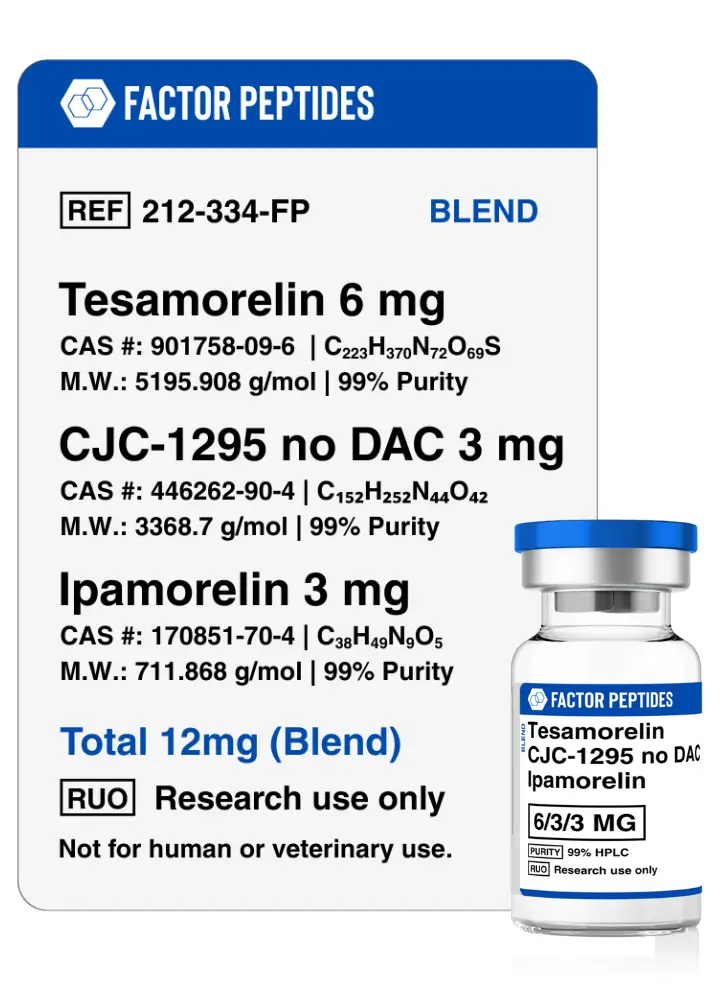
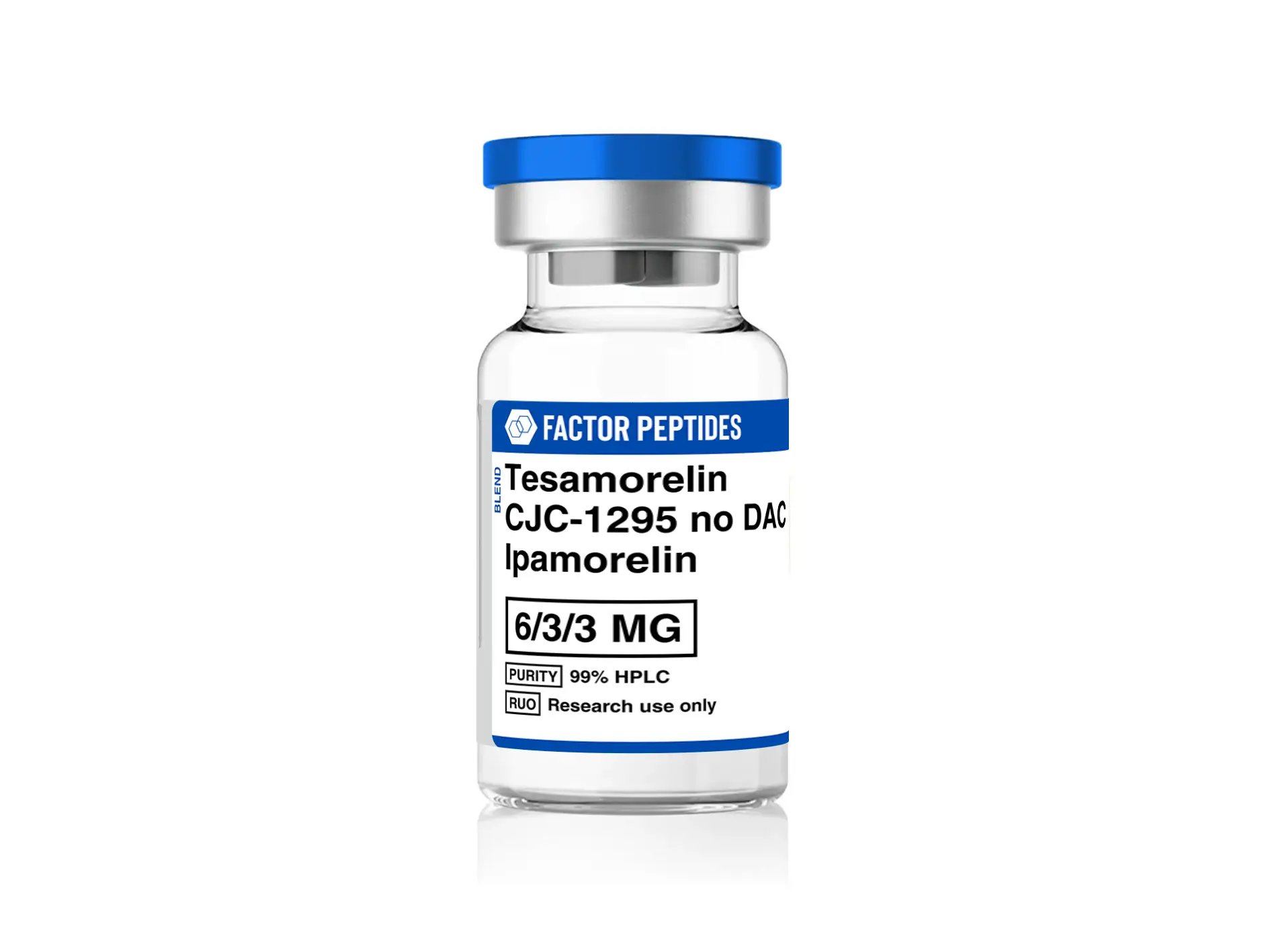
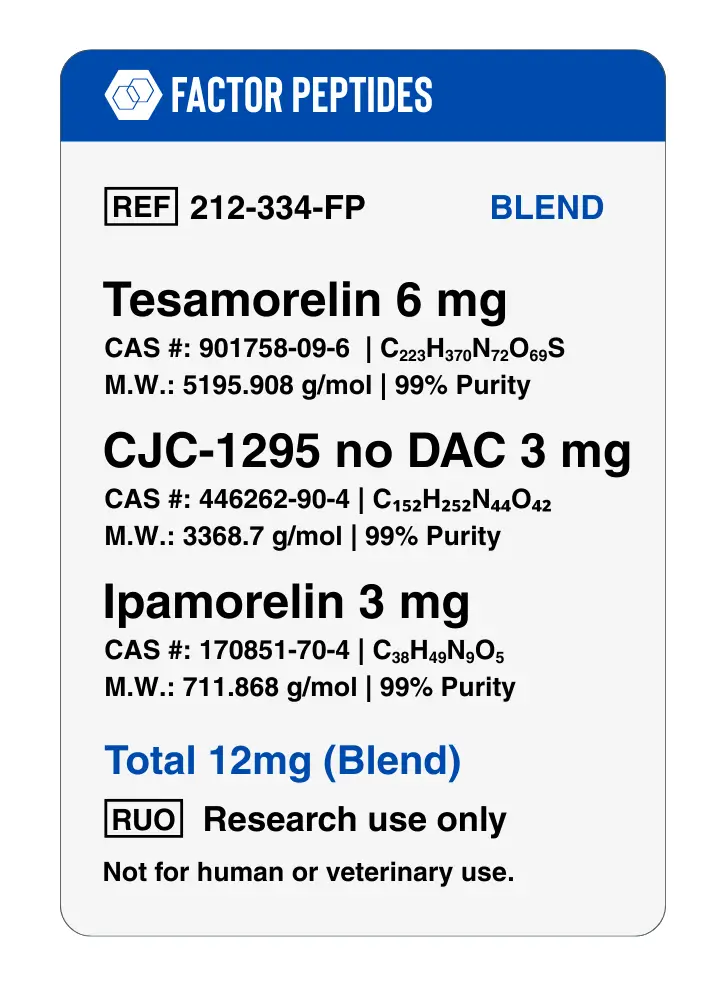
Tesamorelin 6mg, CJC-1295 (No DAC) 3mg, Ipamorelin 3mg (12mg Total Blend)
This peptide blend combines Tesamorelin, CJC-1295 (No DAC), and Ipamorelin to leverage their synergistic effects in stimulating growth hormone-releasing hormone (GHRH) pathways. Research suggests that this combination can significantly enhance natural growth hormone production while offering a wide array of physiological benefits.
Key reported outcomes from studies include:
- Accelerated fat loss, particularly visceral fat reduction
- Improved sleep quality and mood stability
- Enhanced energy levels and mental clarity
- Support for cognitive functions such as memory and focus
- Cellular repair and tissue regeneration
- Sustained, natural GH production over time
This trio is often studied together for its potential in anti-aging, metabolic optimization, and performance-enhancement research. Research also indicates that tesamorelin may offer benefits beyond fat reduction. It is being explored for its potential to support peripheral nerve health and slow the progression of mild cognitive impairment. Some studies suggest that tesamorelin is up to four times more effective at reducing visceral adiposity compared to all other currently available treatment options combined, highlighting its significance in metabolic and neurodegenerative research.
$195.00
All Products
- DESCRIPTION
- STORAGE
What Is CJC-1295 (No DAC)?
CJC-1295 (no DAC), also known as Modified GRF (1-29), is a synthetic 29-amino-acid analogue of growth hormone–releasing hormone (GHRH) with four amino acid substitutions designed to extend its active life in the bloodstream. Research in humans has shown that CJC-1295 (no DAC) can increase growth hormone (GH) and insulin-like growth factor 1 (IGF-1) levels without serious adverse reactions, and a 14-day subcutaneous regimen was reported to be safe and generally well tolerated.
What Is Ipamorelin?
Ipamorelin is a synthetic pentapeptide growth hormone secretagogue and selective ghrelin receptor agonist. In research settings, it has been shown to stimulate growth hormone release with a profile similar in potency to earlier secretagogues such as GHRP-6, but with notably less impact on appetite and on other hormones like cortisol, acetylcholine, prolactin, and aldosterone. Because of this targeted activity, Ipamorelin is often described as the first highly selective GH secretagogue.
What Is Tesamorelin?
Tesamorelin is a growth hormone–releasing hormone (GHRH) analogue that binds and stimulates human GHRH receptors with similar potency to natural GHRH, increasing IGF-1 levels in men and women by an average of about 181 micrograms per liter. Research indicates that it can reduce visceral adipose tissue, triglycerides, carotid intima–media thickness, and C-reactive protein without significantly affecting other pituitary hormones, and it has also been associated with improved cognitive function in healthy older adults and in people with mild cognitive impairment who are at increased risk of progressing to Alzheimer’s disease.
Summary
CJC-1295, Ipamorelin, and Tesamorelin are often compounded together because each supports growth hormone releasing hormone (GHRH) pathways in complementary ways. Research reports accelerated fat loss, better sleep and mood, increased energy, and long term support of growth hormone output with Ipamorelin, especially when it is used programmatically with CJC-1295. After a research cycle, animal models show a prolonged boost in hGH production well beyond the initial dosing period, which may help to maintain benefits over time.
Tesamorelin adds further support to the overall structural framework of the body. This peptide is often explored in subjects aged 30 and above, when natural growth hormone production begins to decline, and physical activity is known to support its release as well. Among growth hormone–releasing peptides, Tesamorelin is considered one of the mildest and most versatile in research settings. It has been noted that it does not typically induce side effects such as desensitization, excessive hunger stimulation, or unnecessary plasma growth that are sometimes associated with other peptides in its class.
Across studies, combining CJC-1295, Ipamorelin, and Tesamorelin has been associated with increased GH secretion and IGF-1 levels, increased muscle growth, higher bone density, improved cognitive function and memory, enhanced cellular repair and regeneration, increased fat loss, and more, in animal models.
CJC-1295, Ipamorelin, and Tesamorelin exhibit minimal side effects, low oral and excellent subcutaneous bioavailability in mice. Per kg dosage in mice does not scale to humans. CJC-1295, Ipamorelin, and Tesamorelin for sale at Peptide Sciences are limited to educational and scientific research only, not for human consumption. Only buy CJC-1295, Ipamorelin, and Tesamorelin if you are a licensed researcher.
Factor Peptides Storage Guidelines:
These peptides arrive in a dried, stabilized form produced by a process called lyophilization, or freeze drying. In this state, they are generally suitable for transport and short-term storage at typical room temperatures for several months.
Once the dry powder is mixed with bacteriostatic water and turned into a liquid solution, the storage requirements change. The reconstituted solution should be kept in a refrigerator to help maintain its properties, and is usually considered suitable for use for about 30 days under chilled conditions.
Lyophilization involves freezing the material and then exposing it to low pressure so that ice in the sample passes directly from solid to vapor, rather than melting. This leaves behind a light, porous, white solid that is more stable than the original liquid. In this form, the product can often be kept at room temperature until it is time to add diluent.
After delivery, it is good practice to protect the vials from heat and strong light. If the product will be used in the near future, storing the lyophilized powder or reconstituted solution in a refrigerator at temperatures below about 4°C (39°F) is typically appropriate. The dry form often remains intact at room temperature for a number of weeks, so this may also be acceptable when immediate refrigeration is not available and the intended use is relatively soon.
For storage over longer periods, such as many months or years, much colder conditions are preferred. Placing the vials in a deep freezer, around -80°C (-112°F), is commonly used to help preserve the structure and activity of peptides for extended time frames.