
Product Usage: This product is intended solely for use as a research chemical. It is designated exclusively for in vitro research and laboratory testing. All information provided on this site is for educational purposes only. It is strictly prohibited to administer this product to humans or animals. Only licensed and qualified professionals should handle it. This product is not classified as a drug, food, or cosmetic and must not be misrepresented or used as such. This product is for research use only. Not for human consumption.
All Products
- DESCRIPTION
- STORAGE
What is it?
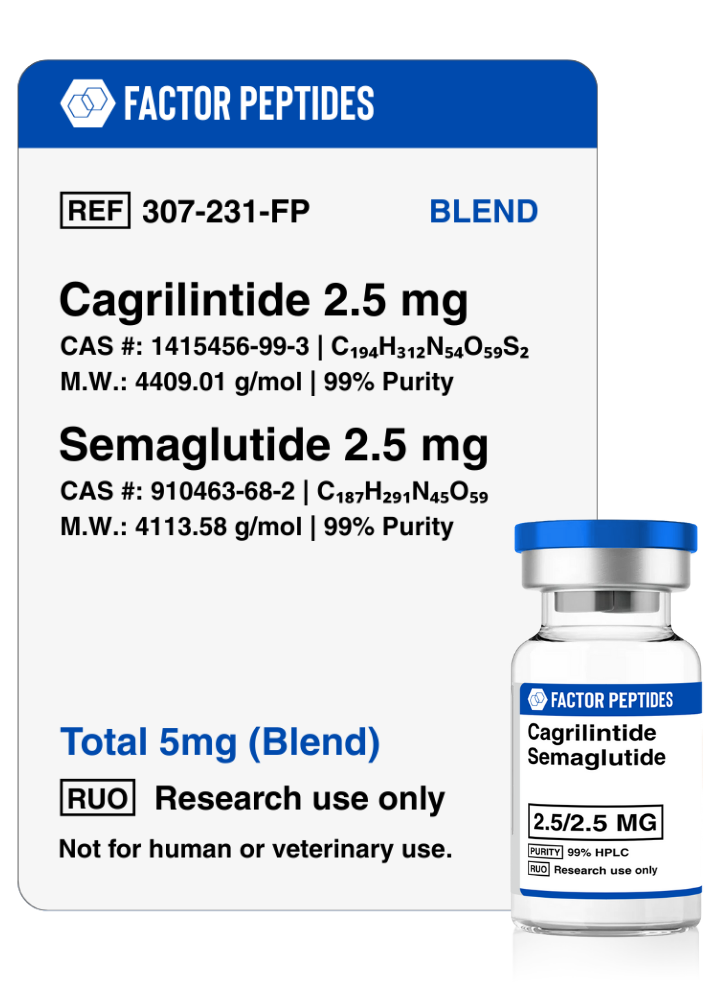
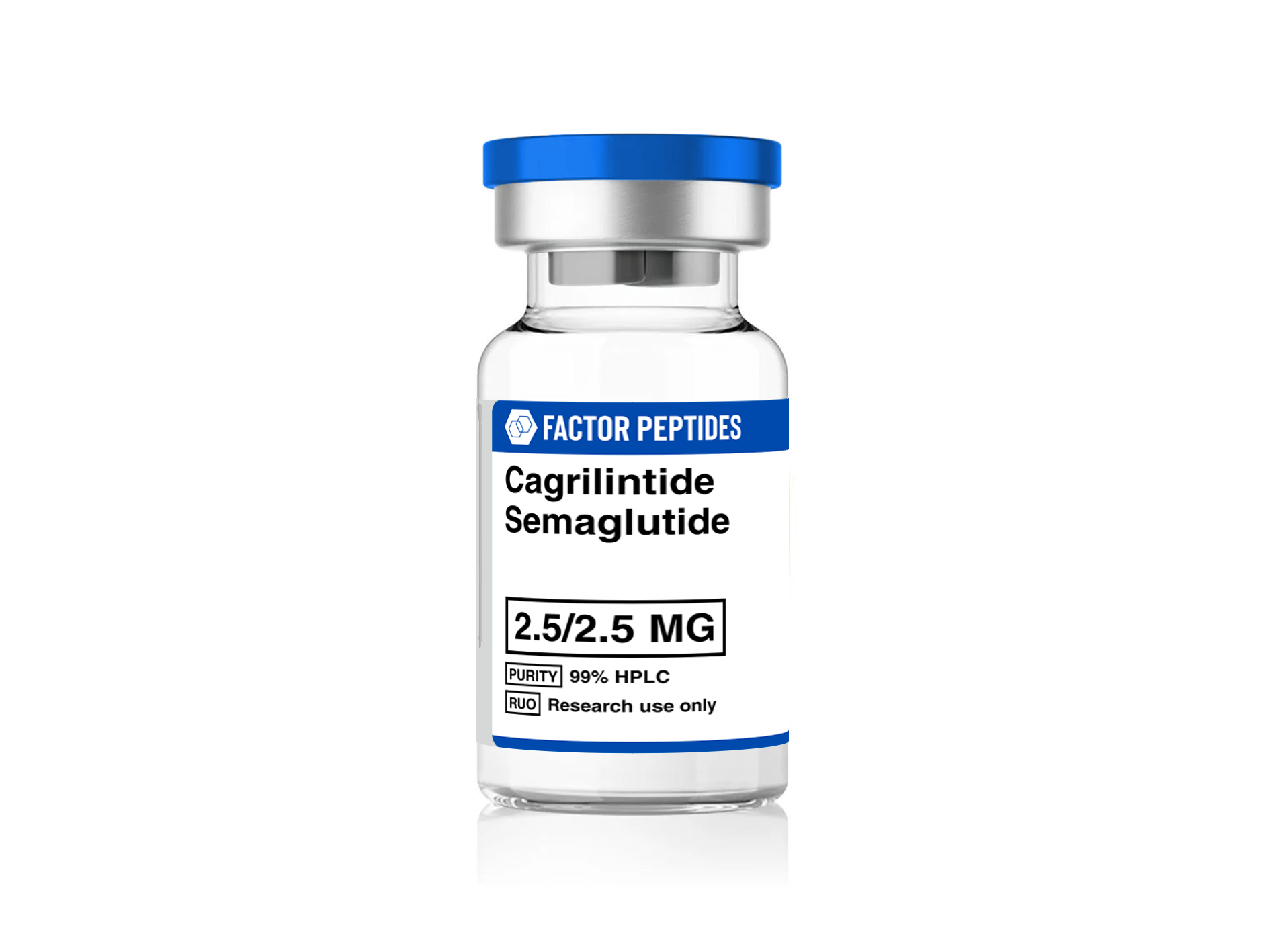
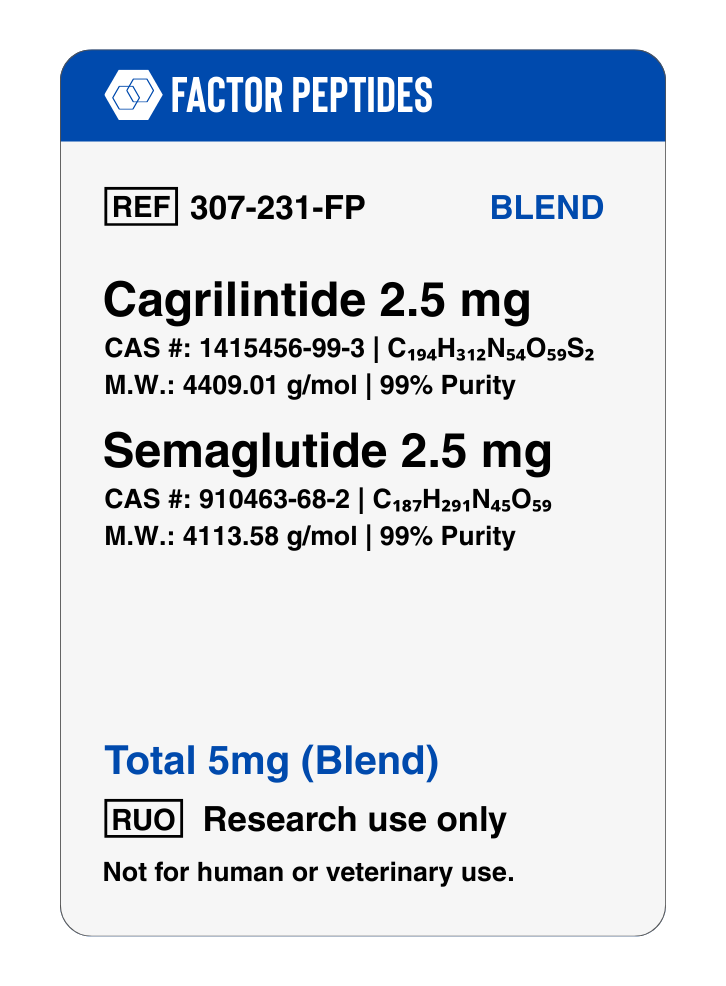
Cagrilintide and Semaglutide is a dual pathway investigational blend combining an amylin analogue with a GLP one receptor agonist. This combination is studied for its potential roles in satiety signaling, appetite control, and metabolic regulation.
How it works?
Cagrilintide interacts with amylin receptors linked to satiety pathways.
Semaglutide engages GLP one receptors involved in gastric emptying and metabolic signaling.
Together they act on complementary centers that regulate hunger response and metabolic activity.
Potential benefits in research settings
- Support for studying appetite modulation
- Support for investigating metabolic pathways
- Support for analyzing dual hormone receptor effects on energy balance
Research Use Only
This compound is supplied strictly for laboratory based investigation. It is not approved for human testing, clinical use, consumption, or therapeutic application. All handling must follow controlled research protocols with appropriate safety measures in place. No part of this material is intended to diagnose, treat, cure, or prevent any condition. It is provided solely for scientific study, biochemical analysis, and non clinical research models.
Factor Peptides Storage Guidelines:
These peptides arrive in a dried, stabilized form produced by a process called lyophilization, or freeze drying. In this state, they are generally suitable for transport and short-term storage at typical room temperatures for several months.
Once the dry powder is mixed with bacteriostatic water and turned into a liquid solution, the storage requirements change. The reconstituted solution should be kept in a refrigerator to help maintain its properties, and is usually considered suitable for use for about 30 days under chilled conditions.
Lyophilization involves freezing the material and then exposing it to low pressure so that ice in the sample passes directly from solid to vapor, rather than melting. This leaves behind a light, porous, white solid that is more stable than the original liquid. In this form, the product can often be kept at room temperature until it is time to add diluent.
After delivery, it is good practice to protect the vials from heat and strong light. If the product will be used in the near future, storing the lyophilized powder or reconstituted solution in a refrigerator at temperatures below about 4°C (39°F) is typically appropriate. The dry form often remains intact at room temperature for a number of weeks, so this may also be acceptable when immediate refrigeration is not available and the intended use is relatively soon.
For storage over longer periods, such as many months or years, much colder conditions are preferred. Placing the vials in a deep freezer, around -80°C (-112°F), is commonly used to help preserve the structure and activity of peptides for extended time frames.