
CJC1295 With DAC 5 mg
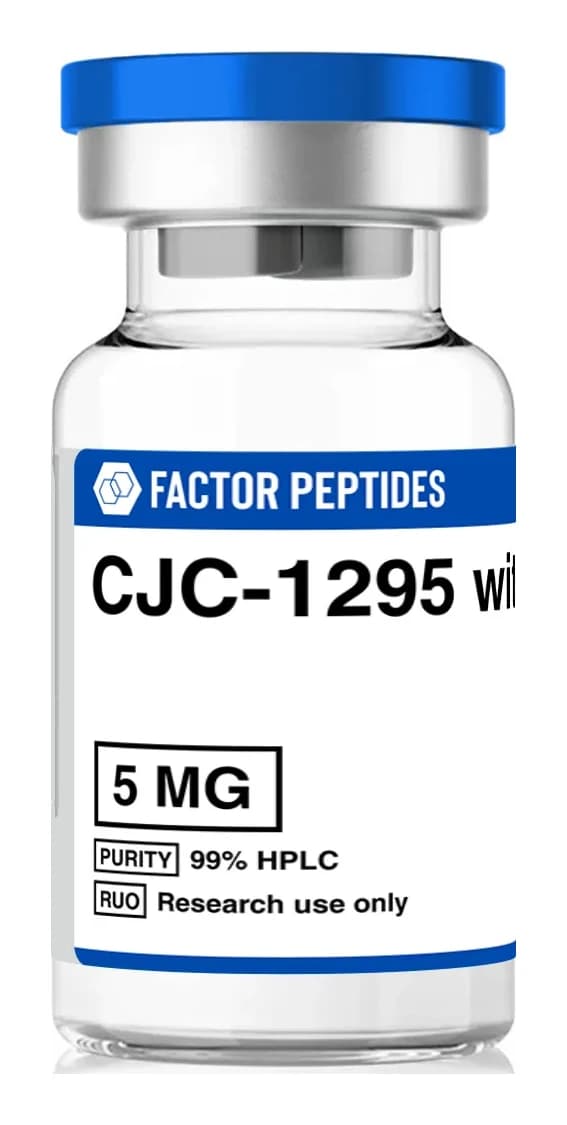
$125.00
In Stock
Quantity
All products are intended strictly for research and laboratory use only.
Product Description
CJC-1295 with DAC is a synthetic peptide of the growth hormone-releasing hormone (GHRH) class, supplied here strictly as a reference material for laboratory research. It is a long-acting analog derived from the first 29 residues of endogenous human GHRH, the minimal fragment required for full GHRH-receptor activity. The molecule carries four amino-acid substitutions (D-Ala at position 2, Gln at position 8, Ala at position 15, and Leu at position 27) that confer resistance to enzymatic cleavage by dipeptidyl peptidase-4 and other plasma proteases. The defining feature of the DAC ("Drug Affinity Complex") variant is a C-terminal lysine bearing a maleimidopropionyl group, extending the chain to 30 residues and enabling covalent binding to circulating serum albumin in study systems.
In preclinical and in-vitro research, CJC-1295 with DAC has been investigated as a tool for studying the GHRH signaling axis and the regulation of growth hormone secretion. Because the albumin-binding linker markedly slows clearance, the compound has been used to examine sustained patterns of growth hormone and insulin-like growth factor-1 (IGF-1) signaling. In a published GHRH-knockout mouse model (Alba et al., 2006), once-daily administration was reported to normalize growth trajectories. A separate clinical pharmacology study in healthy adults (Teichman et al., 2006) reported prolonged elevation of GH and IGF-1 markers following dosing. These citations are provided as published research observations for reference only and do not constitute use instructions or demonstrated benefits for any application.
Specifications: CAS 446262-90-4 · Molecular formula C165H269N47O46 · Molecular weight 3647.25 g/mol · Sequence/length 30 amino acids · PubChem CID 91971820 · Purity >=99% (HPLC) · Form lyophilized powder · Available sizes Default
Storage & handling: Store the lyophilized powder at -20C and protect it from light. Reconstitute with bacteriostatic (BAC) water for laboratory use; keep the reconstituted solution refrigerated and use it within a few weeks to preserve peptide integrity.
For research use only. Not for human consumption. This product is not a drug, food, or dietary supplement and is not intended to diagnose, treat, cure, or prevent any disease.
Categories: Performance