
r

Product Usage: This product is intended solely for use as a research chemical. It is designated exclusively for in vitro research and laboratory testing. All information provided on this site is for educational purposes only. It is strictly prohibited to administer this product to humans or animals. Only licensed and qualified professionals should handle it. This product is not classified as a drug, food, or cosmetic and must not be misrepresented or used as such. This product is for research use only. Not for human consumption.

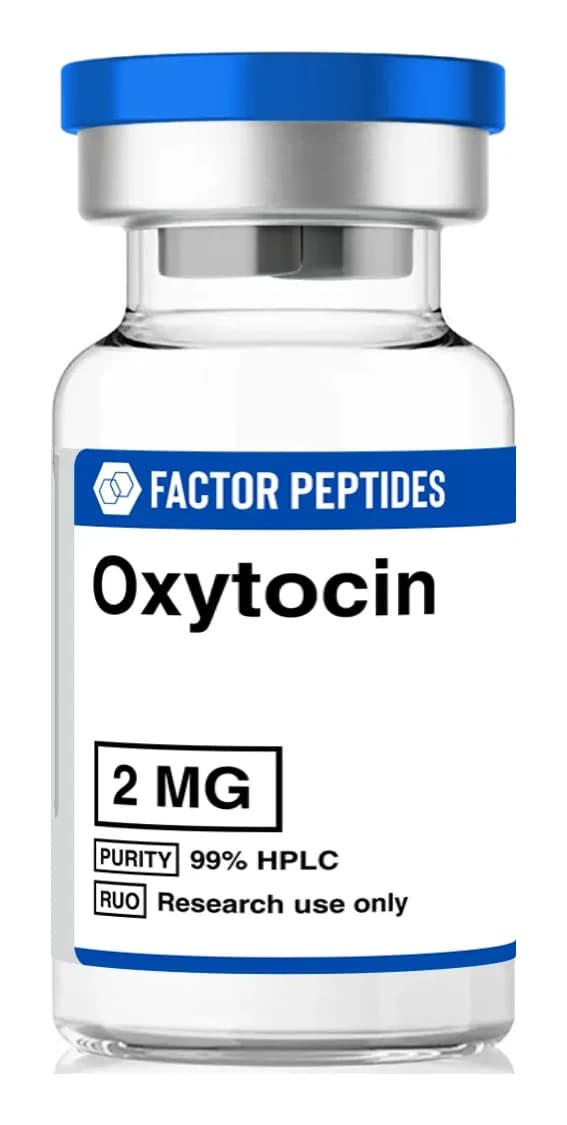
Oxytocin 2mg

Oxytocin is a naturally occurring peptide hormone with well-established roles in sexual reproduction, childbirth, and the bonding process between mother and infant during breastfeeding. It also contributes to tissue repair and wound healing. Recent studies have expanded our understanding of oxytocin’s potential, indicating it may enhance cognitive function, support heart health, and help mitigate the effects of metabolic disorders like diabetes.

$40.00

  • DESCRIPTION
  • STORAGE

Oxytocin Overview

Oxytocin is a small peptide that acts both as a signaling chemical in the brain and as a circulating hormone in the body. In the central nervous system, it is produced in the hypothalamus and released to influence social connection, sexual behavior, and the processes surrounding birth. In the bloodstream, oxytocin is secreted by the placenta during pregnancy, where it contributes to labor, milk release, and early bonding between parent and infant.

In men, smaller amounts of oxytocin are synthesized in reproductive tissues and are thought to support aspects of mating behavior and long-term pair bonding. Across different systems, research has linked oxytocin to a wide range of functions, including:

  • Triggering milk let-down during breastfeeding
  • Driving uterine contractions in labor
  • Contributing to the regulation of blood pressure
  • Modulating how neurons communicate and respond
  • Supporting social attachment and trust
  • Influencing fear, stress, and anxiety responses
  • Affecting overall mood and emotional tone
  • Participating in processes involved in tissue repair and wound healing

Oxytocin Structure

Sequence: Cys(1)-Tyr-Ile-Gln-Asn-Cys(1)-Pro-Leu-Gly
Molecular Formula: C43H66N12O12S2
Molecular Weight: 1007.193 g/mol
PubChem CID: 439302
CAS Number: 50-56-6
Synonyms: Pitocin, Endopituitrina, Ocytocin

What Is Oxytocin?

Oxytocin is a very small peptide hormone, made up of only nine amino acids. It is synthesized mainly in specialized nerve cells of the hypothalamus and then stored and released from the posterior part of the pituitary gland. Additional production occurs in reproductive and endocrine tissues, including the placenta, ovaries, and testes.

Like many signaling peptides, oxytocin is first created as a larger inactive precursor that is later cut down into its active form. More recent findings have shown that oxytocin is also generated in other organs such as the retina, adrenal glands, thymus, and pancreas. Because it is made and used in so many locations, the older view of oxytocin as solely a neurohypophyseal hormone is gradually being replaced by a broader understanding of it as a multisystem messenger with widespread roles in the body.

Oxytocin Research

Oxytocin and Wound Repair

Oxytocin is increasingly recognized as a modulator of the body’s inflammatory response. In human studies where small skin wounds were created under controlled conditions, individuals who displayed higher natural oxytocin levels after supportive social interaction tended to heal faster. In contrast, couples who showed more hostile behavior toward each other during similar procedures often healed more slowly and exhibited altered inflammatory signaling at the wound site.

These findings suggest that oxytocin may serve as a bridge between emotional climate, immune function, and the physical process of tissue repair.

Cardiovascular Health and Oxytocin

Because oxytocin can influence inflammation, metabolism, and stress responses, researchers have begun exploring its impact on heart and blood vessel health. In experimental models, oxytocin exposure has been associated with lower body fat, better blood sugar control, reduced blood pressure, and decreased anxiety. Each of these factors contributes to overall cardiovascular risk.

Some studies indicate that when oxytocin signaling is impaired, blood vessels may be more prone to stiffening and plaque build-up. Restoring or enhancing oxytocin activity in such settings appears to help protect vessel integrity and, in some cases, may even promote partial reversal of early atherosclerotic changes.

Infusion of oxytocin directly into the heart during episodes of reduced blood flow has shown protective effects on heart muscle cells in animal models. Long-term treatment has been linked to less enlargement and weakening of the heart, and there is interest in whether oxytocin could help prepare cardiac stem cells for use in regenerative approaches.

In models of diabetes-related heart damage, oxytocin treatment has reduced fat accumulation, improved fasting glucose, and eased mechanical stress on the heart. These changes were accompanied by less cell death and scarring in heart tissue. Protective effects have also been observed in other organs subjected to periods of low blood flow followed by reperfusion, suggesting a broader role in limiting ischemic injury.

Oxytocin, Metabolism, and Diabetes

Oxytocin appears to influence how the body uses glucose and lipids. In animal studies, the peptide has improved insulin sensitivity in skeletal muscle, enhanced glucose uptake, and promoted the use of fat as an energy source. Animals lacking adequate oxytocin signaling can develop obesity even without overeating, which points to a role in baseline energy balance.

Interestingly, these metabolic effects seem to show up primarily in models of obesity or insulin resistance. Lean animals often show little change in weight, glucose, or insulin after oxytocin treatment, whereas obese counterparts can experience meaningful improvements. Early human work in people with type 2 diabetes using intranasal oxytocin has reported reductions in blood sugar and insulin levels along with moderate weight loss over several weeks. Lower circulating oxytocin has also been linked to poorer glycemic control and higher insulin resistance in observational studies.

Cognition, Early Experience, and Stress

Early life bonding experiences are known to shape long-term brain development and behavior. Animal models suggest that disruptions in nurturing contact can alter oxytocin signaling in key brain regions, with downstream effects on cognitive performance. When oxytocin is provided to animals that experienced early deprivation, certain markers of neuronal development in the prefrontal cortex improve, and there are trends toward better performance on learning tasks under stress, even if behavioral differences are sometimes modest.

These findings support the idea that oxytocin contributes to the maturation of circuits involved in decision-making, emotional regulation, and flexible thinking, especially in the context of social and environmental stressors.

Oxytocin, Anxiety, and Social Behavior

Oxytocin signaling has been repeatedly associated with anxiety, mood, and social interaction. Variations in the gene that encodes the oxytocin receptor have been linked to differences in social comfort, attachment style, and vulnerability to certain anxiety conditions. Epigenetic alterations affecting this receptor have also been observed in individuals with heightened social fear, suggesting the brain may try to compensate for chronically low oxytocin signaling.

In more severe personality patterns characterized by intense fear of rejection, mistrust, and hypervigilance, intranasal oxytocin has been shown to shift nonverbal behavior and responses to social cues. While such conditions remain difficult to manage clinically, these results hint at a role for oxytocin pathways in reshaping how the brain interprets and reacts to interpersonal situations.

Appetite Regulation and Eating Behavior

Studies of rare genetic conditions marked by extreme hunger and difficulty feeling full have highlighted oxytocin’s involvement in appetite control. In these contexts, abnormal suppression of oxytocin signaling appears to contribute to relentless food-seeking behavior. This has led to the broader idea that oxytocin may act as one of several hormonal “brakes” on hunger and may participate directly in controlling when and how much we eat.

Oxytocin and Age-Related Muscle Decline

Recent work suggests that oxytocin is important not only in the brain and cardiovascular system but also in the maintenance and repair of skeletal muscle. As animals age, blood levels of oxytocin fall, and the number of oxytocin receptors on muscle stem cells declines. This combination is associated with reduced regenerative capacity.

When older animals receive oxytocin, muscle stem cells regain much of their responsiveness, and muscle repair after injury can approach the efficiency seen in younger animals. Because normal muscle maintenance depends on cycles of microscopic damage and repair, these findings raise the possibility that oxytocin-based strategies could one day be part of efforts to slow sarcopenia and other forms of age-related tissue decline.

Experimental Status

Most of the detailed data on oxytocin’s roles outside childbirth and lactation come from animal experiments and small or early-stage human studies. In these settings, oxytocin has typically shown a favorable safety profile and good absorption when delivered by injection or nasal routes, though results can vary by species, dose, and context.

Oxytocin remains an active area of basic and translational research. Its potential applications in cardiovascular health, metabolism, mental health, cognition, and tissue repair are still being defined, and much larger, carefully controlled trials are needed before any of these uses can be considered established in clinical practice.

Factor Peptides Storage Guidelines:

These peptides arrive in a dried, stabilized form produced by a process called lyophilization, or freeze drying. In this state, they are generally suitable for transport and short-term storage at typical room temperatures for several months.

Once the dry powder is mixed with bacteriostatic water and turned into a liquid solution, the storage requirements change. The reconstituted solution should be kept in a refrigerator to help maintain its properties, and is usually considered suitable for use for about 30 days under chilled conditions.

Lyophilization involves freezing the material and then exposing it to low pressure so that ice in the sample passes directly from solid to vapor, rather than melting. This leaves behind a light, porous, white solid that is more stable than the original liquid. In this form, the product can often be kept at room temperature until it is time to add diluent.

After delivery, it is good practice to protect the vials from heat and strong light. If the product will be used in the near future, storing the lyophilized powder or reconstituted solution in a refrigerator at temperatures below about 4°C (39°F) is typically appropriate. The dry form often remains intact at room temperature for a number of weeks, so this may also be acceptable when immediate refrigeration is not available and the intended use is relatively soon.

For storage over longer periods, such as many months or years, much colder conditions are preferred. Placing the vials in a deep freezer, around -80°C (-112°F), is commonly used to help preserve the structure and activity of peptides for extended time frames.

Factor Peptides Logo

You must be 21 years of age or older to enter this site.

By accessing this website, you agree to our Terms and Conditions.

All products offered by Factor Peptides are intended strictly for research and laboratory use only. Accessories such as bacteriostatic water, syringes, or related equipment are not included. Most compounds are provided in lyophilized (powdered) form and must be properly reconstituted with an appropriate diluent before use in research settings.