
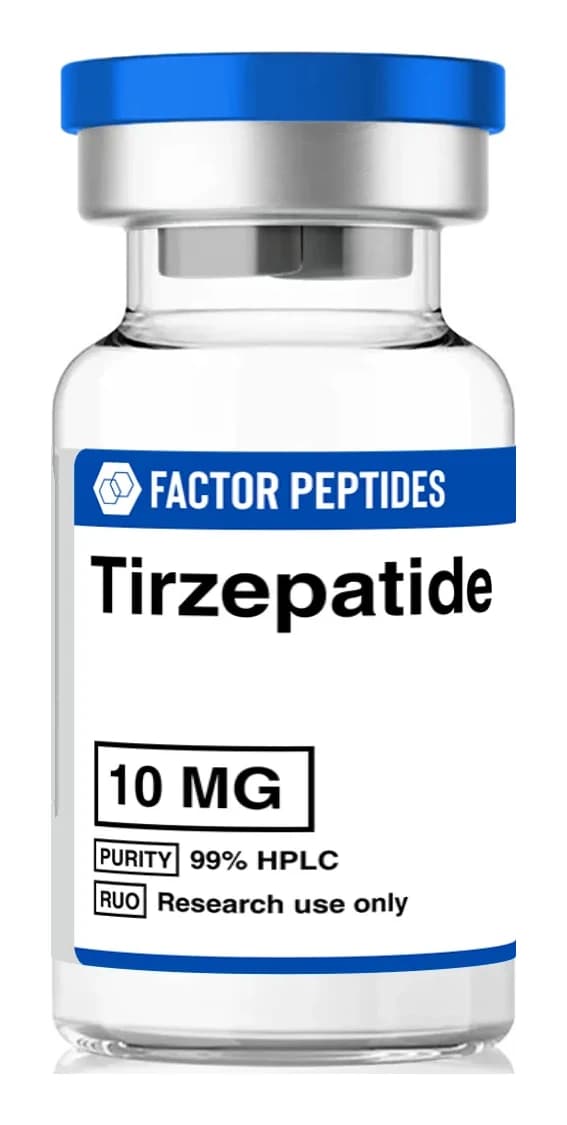
Tirzepatide 10 mg
$145.00
In Stock
Quantity
All products are intended strictly for research and laboratory use only.
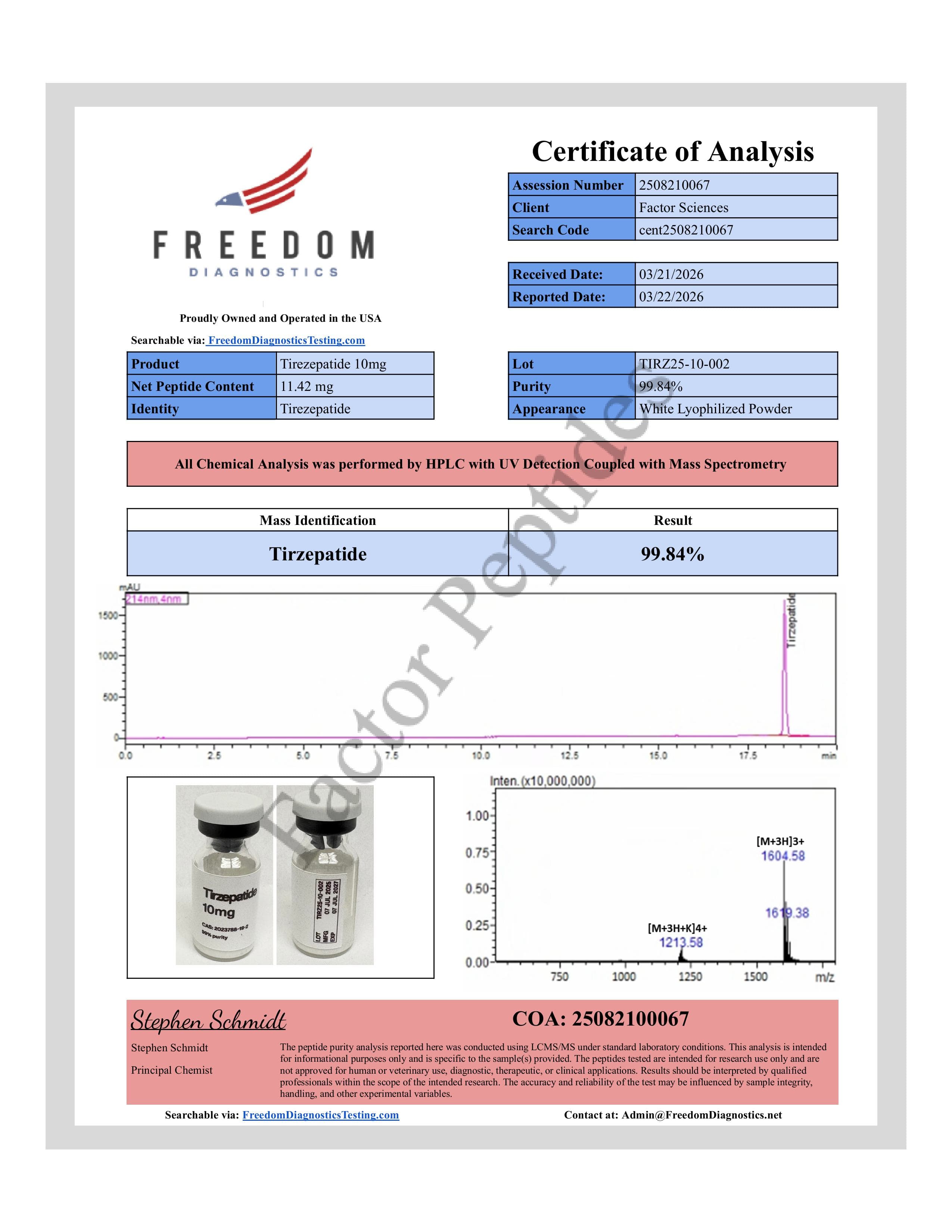
Certificate of Analysis
Independent third-party HPLC purity testing by Freedom Diagnostics.
Product Description
Tirzepatide (research designation LY3298176) is a synthetic, single-chain peptide and a first-in-class dual agonist at the glucose-dependent insulinotropic polypeptide (GIP) and glucagon-like peptide-1 (GLP-1) receptors. The 39-amino-acid sequence is engineered primarily from the native human GIP backbone, incorporates non-coded aminoisobutyric acid (Aib) residues and a C-terminal amide, and is functionalized at a lysine residue with a C20 fatty di-acid (eicosanedioic acid) moiety via a linker that promotes albumin binding and an extended duration of action in pharmacokinetic studies. This structural design makes it a frequently used reference compound in incretin and metabolic-signaling research.
In preclinical and in-vitro studies, tirzepatide has been investigated for its concurrent engagement of two incretin receptor pathways, with reported effects on cyclic AMP signaling, beta-cell physiology, and glucose-dependent insulin secretion in cell-based and animal models. Researchers have also examined its activity in relation to energy balance, food-intake behavior, and body-weight regulation in rodent obesity models, as well as its receptor-binding selectivity and structural determinants of dual agonism characterized through cryo-EM and mutagenesis work. These investigations position the molecule as a tool for studying comparative incretin pharmacology and metabolic disease mechanisms in a laboratory setting.
Specifications: CAS 2023788-19-2 · Molecular formula C225H348N48O68 · Molecular weight 4813.45 g/mol · Sequence/length 39 amino acids · Purity >=99% (HPLC) · Form lyophilized powder · Available sizes Default
Storage & handling: Store the lyophilized powder at -20C and protect it from light. Reconstitute with bacteriostatic (BAC) water for laboratory use, keep the reconstituted solution refrigerated, and use it within a few weeks to maintain peptide integrity.
For research use only. Not for human consumption. This product is not a drug, food, or dietary supplement and is not intended to diagnose, treat, cure, or prevent any disease.
Categories: Top Picks, Composition